The Eye Foundation Group of Hospitals is observing World Glaucoma Week from March 8 to 14 as part of the global initiative led by the World Glaucoma Association to raise awareness about glaucoma and promote early detection to prevent irreversible vision loss.
The observance aims to encourage individuals, eye care professionals, health officials and the public to safeguard vision through regular eye examinations. Doctors emphasised that routine eye and optic nerve checks are essential to detect glaucoma at an early stage and prevent permanent blindness.
Glaucoma is one of the leading causes of irreversible blindness worldwide. Studies indicate that nearly three to five per cent of Indians are at risk of developing glaucoma, yet more than 90 per cent of cases remain undiagnosed. In India, glaucoma accounts for around 12.8 per cent of blindness.
Population-based studies such as the Vellore Eye Study and the Chennai Glaucoma Study indicate that the prevalence of glaucoma in India ranges between two and 13 per cent, with an average of 3.23 per cent. Nearly 11.9 million Indians are estimated to be at risk of glaucoma, while about 10.3 per cent are susceptible to angle-closure glaucoma. Around 4.7 million people in India are affected by ocular hypertension, which can lead to glaucoma if left untreated.
Globally, about 76 million people are affected by glaucoma. Of these, about 2.1 million have lost vision completely and another 4.2 million suffer from severe visual impairment. In India alone, an estimated 12 million people above the age of 40 are affected by glaucoma, including about 6.48 million with open-angle glaucoma and 2.54 million with angle-closure glaucoma.
Often described as the silent thief of sight, glaucoma progresses gradually without noticeable symptoms and can lead to permanent vision loss if not detected early. People above the age of 40, those with diabetes, high myopia, a family history of glaucoma and individuals on long-term steroid medication are considered to be at higher risk. Studies indicate that only about 50 per cent of glaucoma patients have undergone an eye examination, highlighting the need for regular screening among high-risk groups.
Doctors said Minimally Invasive Glaucoma Surgery has emerged as a major advancement in glaucoma treatment. These procedures help reduce intraocular pressure through smaller incisions, offering quicker recovery and fewer complications compared to conventional surgeries. The procedures improve fluid drainage within the eye or reduce fluid production and are considered effective for patients with mild to moderate glaucoma who do not respond well to medication or laser treatment.
At The Eye Foundation, a wide range of minimally invasive glaucoma procedures including iStent, KDB Glide, GATT and Miniject are performed in addition to conventional surgical procedures such as trabeculectomy and aqueous drainage implants. Across its centres, the hospital performs around 1,500 glaucoma surgeries annually.
As part of the World Glaucoma Week observance, the hospital is conducting awareness programmes and screening initiatives across all its centres. From March 8 to 14, free glaucoma consultations are being offered for patients at all its branches. Patients will also receive a 10 per cent discount on glaucoma investigations and surgical procedures and a 50 per cent concession on glaucoma consultations for blood relatives.
R. Chitra, Medical Director and Consultant in Glaucoma, Cataract and Refractive Surgery Services, along with Muralidhar R., Aiman Ahmed Khan and Nirajana Balasubramaniam, emphasised the importance of regular glaucoma screening, particularly for individuals above the age of 40 and those with risk factors such as diabetes, high myopia or a family history of glaucoma. They noted that early diagnosis and timely treatment can effectively prevent vision loss and significantly improve the quality of life for patients.
The Eye Foundation has integrated advanced diagnostic technologies and treatment methods to provide comprehensive glaucoma care. Patients above 40 years of age are routinely screened for glaucoma irrespective of their primary complaint. Diagnostic procedures include intraocular pressure measurement, gonioscopy, automated perimetry and Optical Coherence Tomography to assess optic nerve health. Once diagnosed, treatment plans are individualised for each patient, including medications, laser procedures or surgical interventions when required.
To mark World Glaucoma Week, The Eye Foundation has invited the public to undergo free glaucoma screening from March 8 to 14 and encouraged people to undergo regular eye examinations to protect their vision.
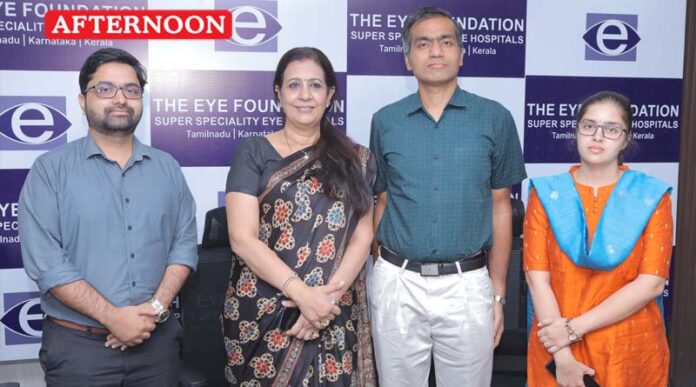
Eye Foundation Marks World Glaucoma Week With Awareness Drive And Free Consultations
Must Read
Coimbatore Corporation Intensifies Monsoon Relief Work
The Coimbatore City Municipal Corporation has intensified relief operations to address the impact of recent heavy rains ahead of the Northeast Monsoon.
On the instructions...